
Sovereignty bill: How it may impact independent journalism in Uganda
The proposed Protection of Sovereignty Bill, 2026, has generated public debate among different professional groups in Uganda, particularly those whose work involves international collaboration and funding.
The Bill is broadly framed around strengthening national sovereignty, understood as a country’s authority to govern itself without external interference. According to Uganda’s Attorney General, Kiryowa Kiwanuka, this conversation is not new. “No nation is an isolated island; every country faces foreign influence,” he notes, arguing that the real challenge lies in how countries manage it.
He further points out that Uganda is “not starting from scratch,” referencing existing laws such as the NGO Act (2016) and the Political Parties and Organisations Act (2005).
However, he maintains that new legislation is necessary to address emerging challenges, particularly in the digital space and evolving forms of foreign engagement.
A central issue in the debate is how the Bill defines foreign involvement. Kiwanuka draws an important distinction: “Foreign influence… is open, transparent engagement,” while “foreign interference is often covert, coercive, deceptive.” This distinction is critical, but it also raises practical concerns. In sectors like journalism, where collaboration across borders is common, applying this difference may not always be straightforward.
The Bill proposes that individuals or organisations receiving foreign support in certain contexts may be required to register or seek approval. It specifically targets activities “intended to promote the interests of a foreigner against the interests of Ugandans” or those aimed at influencing government policy, public opinion, or electoral processes.
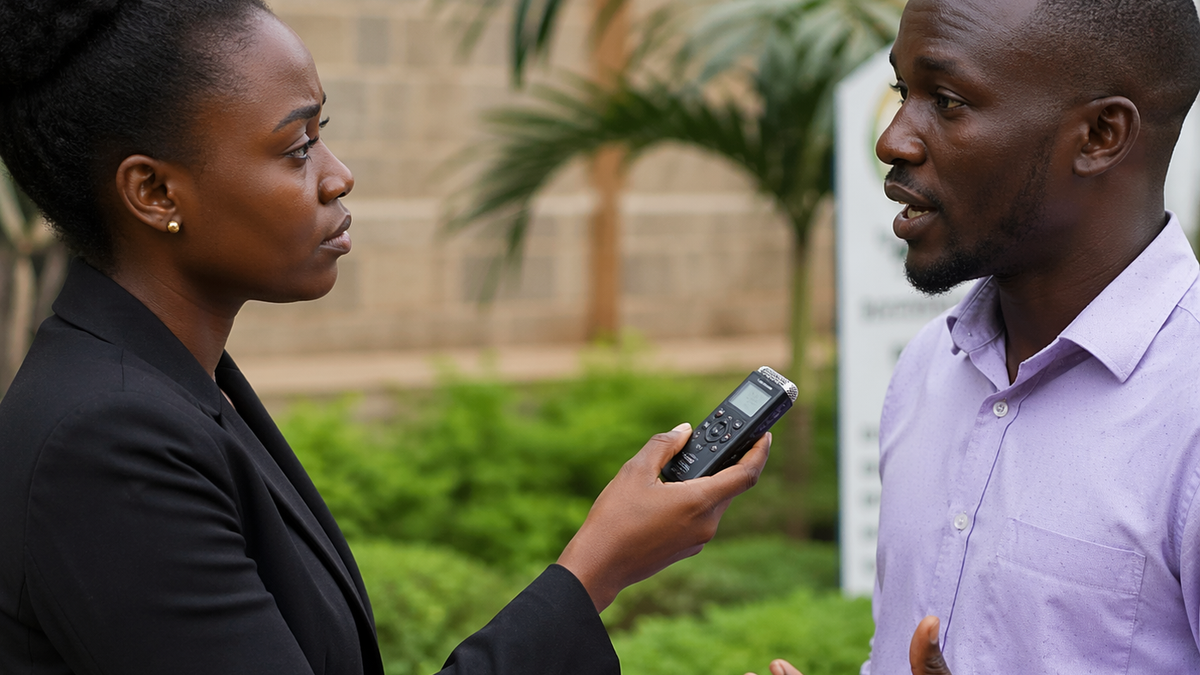
While this scope is presented as focused, questions remain about how broadly such provisions could be interpreted. Independent journalists, for example, often rely on international grants, editorial partnerships, and cross-border publishing platforms. These collaborations are typically used to report on domestic issues such as governance, climate change, and public health.
Kiwanuka emphasises that not all foreign funding falls under the Bill. He clarifies that it “does not include funds received for private, commercial or family purposes,” and stresses that definitions must be precise: “As is usual in legal matters, definitions are the foundation… we must define terms precisely.”
This emphasis on clarity directly reflects concerns raised by journalists and media practitioners. Terms such as “agent of a foreigner” or actions interpreted as serving “external interests” may be difficult to apply in practice, especially in cases of critical or investigative reporting.
Beyond journalism, similar concerns are emerging in sectors like research, education, and civil society, where international cooperation is part of everyday work. These fields depend on cross-border partnerships for funding, knowledge exchange, and capacity building.
At the same time, the government’s justification for the Bill is rooted in broader concerns. Kiwanuka argues that it is “grounded in the urgent need to safeguard Uganda’s autonomy and stability,” and insists that it should not be seen as restrictive. Instead, he describes it as “a measured assertion of Uganda’s right to self-govern.”
This framing highlights the central policy tension: how to protect national sovereignty without undermining legitimate professional activity. For independent journalism, the concern is not only about access to funding, but also about whether increased regulation could influence editorial decisions or lead to self-censorship.
Kiwanuka acknowledges that striking this balance is essential, noting that “success hinges on clear definitions… and the wisdom to tell the difference between helpful foreign engagement and covert interference.” This is particularly relevant in journalism, where distinguishing between influence and interference is not always clear-cut.
As discussions around the Bill continue, stakeholders are calling for safeguards that ensure its implementation does not unintentionally restrict independent reporting or limit access to information. For journalists, maintaining editorial independence while operating within new regulatory frameworks will be a key issue to watch.
The outcome of this debate will shape how Uganda navigates the intersection between sovereignty and global engagement. The challenge lies in ensuring that efforts to regulate foreign influence do not come at the cost of press freedom and the public’s right to know.