

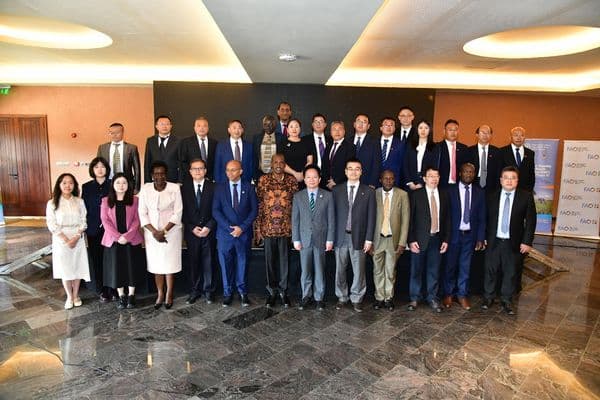
Uganda, China and FAO conclude phase III of South-South Cooperation project
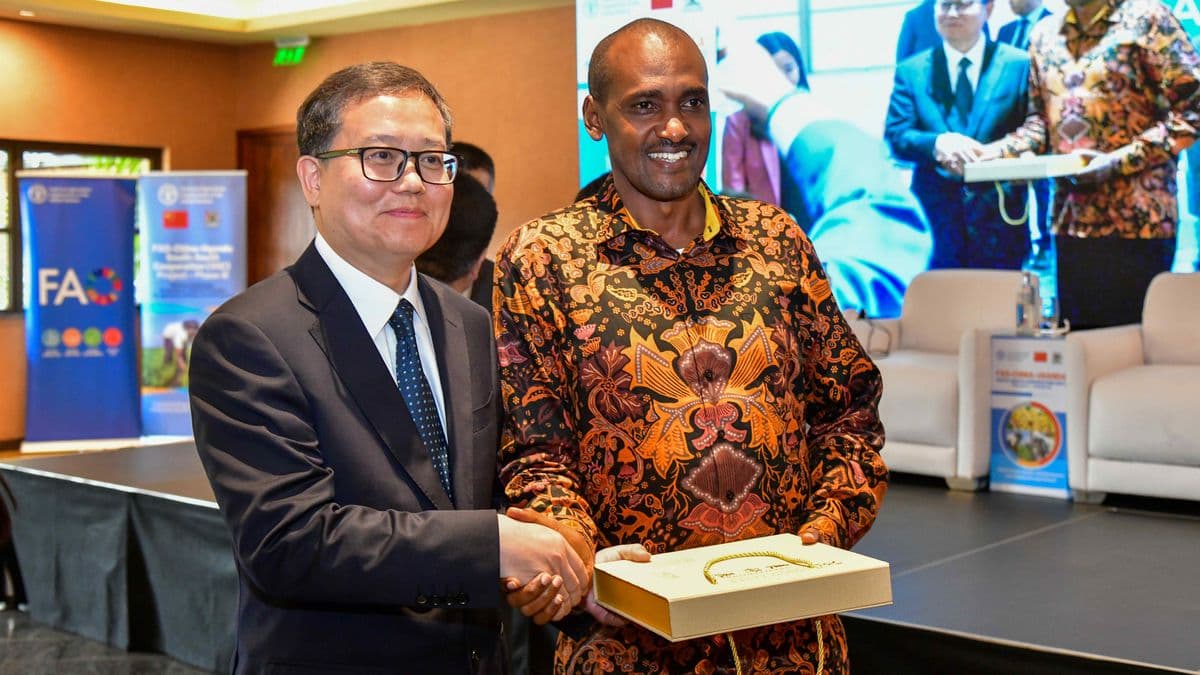
Uganda, China and the Food and Agriculture Organization (FAO) have concluded Phase III of the South-South Cooperation (SSC) Project following a tripartite review workshop in Kampala.
The meeting brought together government officials, researchers, development partners and private sector actors to assess progress, share experiences, and reflect on lessons from the current phase of implementation.
Opening the workshop, Ezana Kassa, the FAO representative in Uganda described Uganda as a key partner and one of the strongest examples of the project’s impact.
“Uganda is an important partner in this initiative and among the countries that have significantly benefited from the project. Today, we reflect on what has been achieved and how we move forward together,” he said.
Kassa noted that the South-South Cooperation model has encouraged multi-stakeholder collaboration, bringing together governments, technical experts, and private sector actors to address shared development challenges.
“I would like to extend my appreciation for the successful completion of this phase. As we move forward with a shared future, South-South Cooperation continues to support the common development of developing nations,” he added.
Delivering the keynote address, Frank Tumwebaze, the Minister of Agriculture, Animal Industry and Fisheries (MAAIF) highlighted the depth of Uganda–China relations, describing them as a long-standing partnership that has translated into trade, investment, and strategic collaboration in agriculture.
“This project directly supports our priorities on agro-industrialisation, food security, and rural livelihoods, and aligns well with our value chain development strategy,” he said.
Tumwebaze said the project has supported key agricultural value chains, including rice, millet, sorghum, chilli, livestock, and fisheries sectors that are critical to livelihoods, food security, and economic growth.
He noted that through the partnership, Uganda has benefited from improved technologies and high-yielding varieties, including rice-WDR 73, foxtail millet, chilli, and big ear goats, supported through research, breeding, multiplication, and adoption.
The Minister also pointed to growing trade ties between Uganda and China, noting that new market opportunities are emerging for agricultural products. Following engagements under the Forum on China-Africa Cooperation (FOCAC), Uganda signed trade protocols for chili and wild aquatic products, while exports such as coffee have increasingly entered the Chinese market.
He emphasised that the government will integrate the project’s achievements into national programmes such as the Parish Development Model (PDM) and other agricultural initiatives, with a focus on scaling successful technologies, strengthening public-private partnerships, and improving market access for farmers.
“As this phase comes to an end, we must see it not as a conclusion, but as a new beginning, one where Uganda, China and FAO continue to work together to build resilient and inclusive agrifood systems,” he said.
According to Samuel Muloma, Senior Agriculture Officer at MAAIF and National Counterpart for the SSC Project, the Ministry is already working to ensure that the gains made are sustained and expanded.
He noted that South-South Cooperation activities are being integrated into existing government programmes, while also being treated as a priority area for agricultural transformation. He added that although the project has so far been implemented in selected districts, there are plans to scale it up to more districts across the country to ensure continued impact and sustainability.
The partnership has over the years supported improvements across crop production, livestock, aquaculture, and value addition, while strengthening institutional coordination between Ugandan institutions and Chinese technical teams.
More than 50 demonstration sites have been established across the country, serving as learning hubs where farmers can access new technologies, improved inputs, and practical training. These sites have played a key role in supporting the adoption of modern farming practices and increasing productivity at the household level.
Local capacity has also been strengthened through ongoing training and technical support, contributing to the emergence of a new generation of skilled agricultural practitioners, extension workers, and farmers better equipped to sustain the gains made under the project.
Speaking at the workshop, Anping Ye, the Director, Division for South-South and Triangular Cooperation, FAO, emphasised Uganda’s unique role in the global South-South Cooperation programme.
“Uganda is a key partner and a strong example of effective South-South Cooperation in agriculture,” he said, noting that the country is the first and only developing nation to financially contribute to the FAO–China SSC Programme through a Unilateral Trust Fund.
He added that the broader FAO–China South-South Cooperation Programme, supported by China with over 130 million US dollars since 2009, has helped drive agricultural transformation across more than 100 countries.
In Uganda alone, Ye said, the project has introduced more than 200 agricultural technologies and crop varieties for testing and adoption, including improved rice and millet varieties, some of which have already been commercially released.
“These achievements demonstrate the power of partnership, strong leadership, and national ownership in delivering sustainable agricultural transformation,” he said.
On behalf of the Chinese government, Fan Xuecheng, Charge d’Affaires at the Chinese Embassy in Uganda, congratulated Uganda on the successful implementation of the project, noting that Phase III has delivered tangible results aligned with the country’s development goals.
He said the partnership has strengthened bilateral relations, deepened mutual trust, and unlocked greater potential for cooperation, particularly in areas such as agricultural modernisation, technology transfer, and capacity building.
Uganda–China trade relations have continued to expand, with China remaining one of Uganda’s largest trading partners. Uganda’s key exports to China include coffee, sesame seeds, fish, and other agricultural products, reflecting the growing role of agribusiness in the bilateral relationship.
The China–Uganda agricultural cooperation model has also contributed to upgrading value chains by linking farmers to markets, improving production standards, and supporting value addition, all of which are critical to increasing farmer incomes and enhancing competitiveness.
The workshop also featured a panel discussion on effective partnerships, collaboration, and coordination to achieve impactful results, with participants highlighting the importance of strong institutional linkages among government, research institutions, and the private sector.
The FAO–China–Uganda South-South Cooperation (SSC) Project, a trilateral initiative between Uganda, China, and FAO, has, over the past 14 years, supported agricultural development through knowledge exchange, technology transfer, and capacity building.
Implemented across more than 30 districts, including Luwero, Kalungu, Wakiso, Budaka, Amuria, Kibuku, Masindi, Kabale, Isingiro, Kiruhura, Nakaseke, and Butaleja, the project has focused on improving productivity in crops, livestock, and aquaculture while strengthening research systems and market linkages.
With Uganda seeking to boost productivity amid rising food demand and increasing pressure on food systems, stakeholders say the partnership will remain critical in bridging gaps in technology, skills, and investment, while shaping the next phase of agricultural transformation in the country.
The FAO–China–Uganda South-South Cooperation Project in Uganda is the programme’s longest-running initiative. Since 2012, it has been implemented in three phases, reflecting a strong and sustained partnership between the Government of Uganda, China and the Food and Agriculture Organization (FAO) in support of agrifood systems development.
Related Stories