How cultural run is building awareness for the fight against HIV/AIDS in Uganda
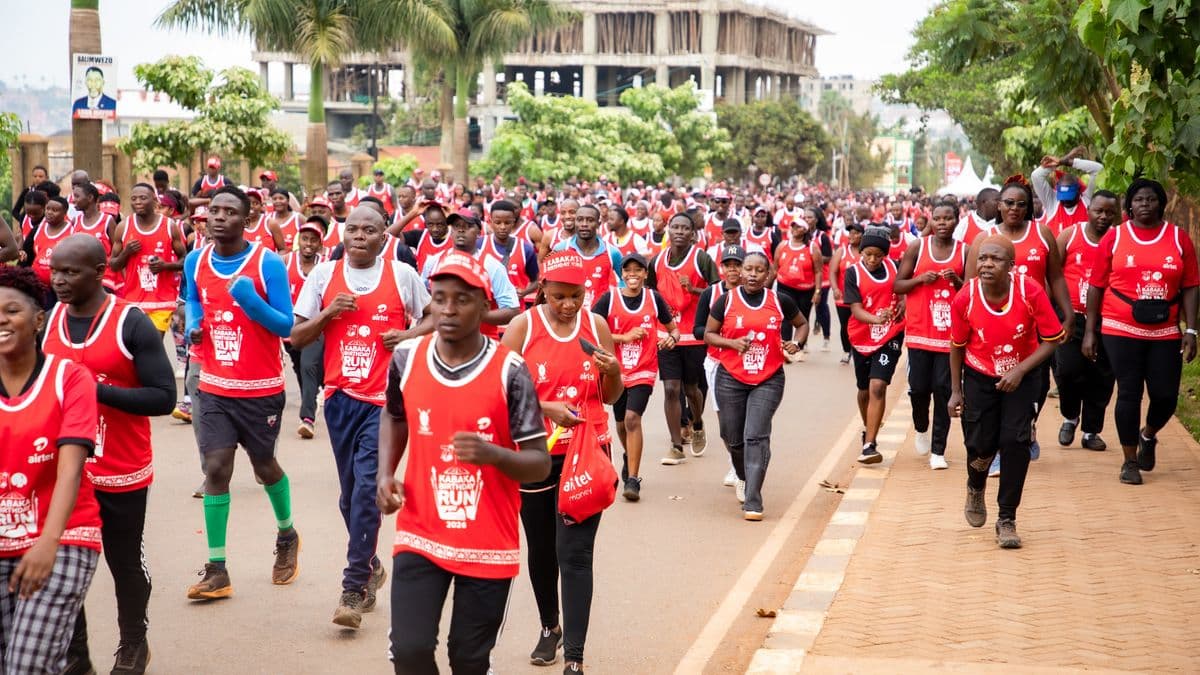
The men attending this run every year have an obligation to save the girl child and strengthen the fight to end HIV/AIDS by 2030. But that responsibility does not stop with them. It extends to families, communities, and institutions, shaping how Uganda is approaching one of its most persistent public health challenges.
The run named the “Kabaka Birthday Run” was originally set to celebrate the birthday of the Kabaka, a title given to the Kings of Buganda. Buganda is part of the more than 50 tribes in Uganda and has the largest population, with about 7 million people. The Buganda Kingdom is located in central Uganda and remains one of the most influential cultural institutions in the country.
Over time, the Kabaka Birthday Run has evolved beyond celebration into a platform for public health awareness, particularly in the fight against HIV and AIDS. What makes it stand out is not just the scale, with tens of thousands of participants each year, but how it uses culture and identity to communicate health messages in a way that resonates with ordinary people.
“The Kabaka’s Birthday Run is relevant to all of us. Kabaka wants us to use his birthday as a platform to promote good health. For the past years, we have been fighting AIDS by encouraging, especially men, to spearhead the cause against HIV/AIDS. We encourage testing, taking medication, and we also encourage abstinence among young people,” said Charles Peter Mayiga, the current Katikkiro (prime minister) of the Buganda Kingdom.
Depending on the selected day, but mostly in the month of April, the campaign begins with wide publicity and calls for people to come and join the run as part of the movement. In the weeks leading up to the event, messages are shared across media platforms, community spaces, and institutions, encouraging participation. This early mobilisation is important because it turns the run from a single-day activity into a sustained awareness campaign.
The money raised through the Kabaka Birthday Run plays a central role in strengthening Uganda’s response to HIV and AIDS. Funds collected from participants buying running kits, sponsorships, and partnerships are channelled into health-related interventions, particularly those focused on HIV prevention, testing, and community sensitisation.
A significant portion of these resources is directed toward awareness campaigns that reach communities beyond the capital. These include outreach programs that encourage early HIV testing, promote safe health practices, and reduce stigma associated with the virus. By taking these messages into rural and urban communities, the campaign extends its impact far beyond the day of the run itself.
The funds also support health partners and organisations working on the ground to improve access to HIV services. This includes supporting testing drives, information dissemination, and linking individuals to care and treatment services. In some cases, the resources help strengthen ongoing community programmes that focus on vulnerable groups, especially young people and women who continue to face higher risks of infection.
Over time, this approach has helped position the run as more than a symbolic event. It functions as both a financing and mobilisation tool that supports Uganda’s broader public health goals. Under the leadership of Ronald Muwenda Mutebi II and coordinated by the Buganda Kingdom, the initiative has shown how cultural platforms can be used to both raise awareness and channel resources into practical health interventions.
In this way, the Kabaka Birthday Run operates as both a fundraising and awareness platform. It brings people together physically on the day of the run, but also continues to influence health outcomes through the programmes it supports, long after the event has ended.
Moses Musiime, Marketing Manager at Kampala Hospital, who also took part in the run and supported first aid services for participants, said it is important for Ugandans across the country to join the fight against HIV/AIDS and work towards ending it by 2030.
David Birungi, Public Relations Manager at Airtel, a partner in the Kabaka Birthday Run, noted that the event plays a key role in reminding men of their responsibility in the fight against HIV/AIDS and in keeping the conversation on prevention and awareness ongoing.
Another participant, Rosemary Nalwadda, said the run brings people together and helps create mass awareness about the fight against HIV/AIDS.
Uganda continues to face a significant HIV burden, with an estimated 1.4 million people living with the virus and around 50,000 new infections recorded annually, according to Uganda AIDS Commission and UNAIDS estimates. While progress has been made over the years, these figures show that the fight is far from over. Women and girls remain disproportionately affected, which is why prevention campaigns continue to focus on vulnerable groups.
The strength of the run lies in how it turns awareness into a shared experience. Instead of information being confined to clinics or formal campaigns, it is brought into a public space where people participate together. Families, youth groups, institutions, and workplaces all take part, making the message more visible and less stigmatised. In that setting, conversations around HIV testing and prevention become easier to have.
There is also a practical approach behind this visibility. Health organisations often use the momentum of the run to promote HIV testing, distribute information, and encourage early treatment. For many, the event becomes a first point of engagement, especially for those who may not actively seek out health services on their own.
However, the real impact depends on what happens after the run. Awareness alone is not enough to reduce infections. The challenge is whether participants take the next step, whether they go for testing, seek treatment, and continue the conversations within their communities.
Without this follow through, even the largest turnout risks becoming symbolic rather than transformative. This is where the run fits into a broader solution. It does not solve the problem on its own, but it creates the conditions for change by breaking stigma, increasing visibility, and encouraging collective responsibility. By grounding health messaging in culture, it reaches people in a way that feels familiar and trusted.
As Uganda works towards ending HIV/AIDS by 2030, initiatives like the Kabaka Birthday Run show how community-driven approaches can support national goals. They remind people that the fight against HIV is not limited to health facilities, but is part of everyday life, shaped by choices, awareness, and shared responsibility.
The Kabaka Birthday Run was inaugurated in 2014 to celebrate the 59th birthday of the Kabaka
Ronald Muwenda Mutebi II. As of the 2026 edition, the initiative is in its 13th run. Over this
time, it has grown from a small local road race into one of Uganda’s largest and most
influential social and health advocacy events.
Related Stories