



Scientists test Chinese big-eared goat breed’s adaptability in Uganda conditions
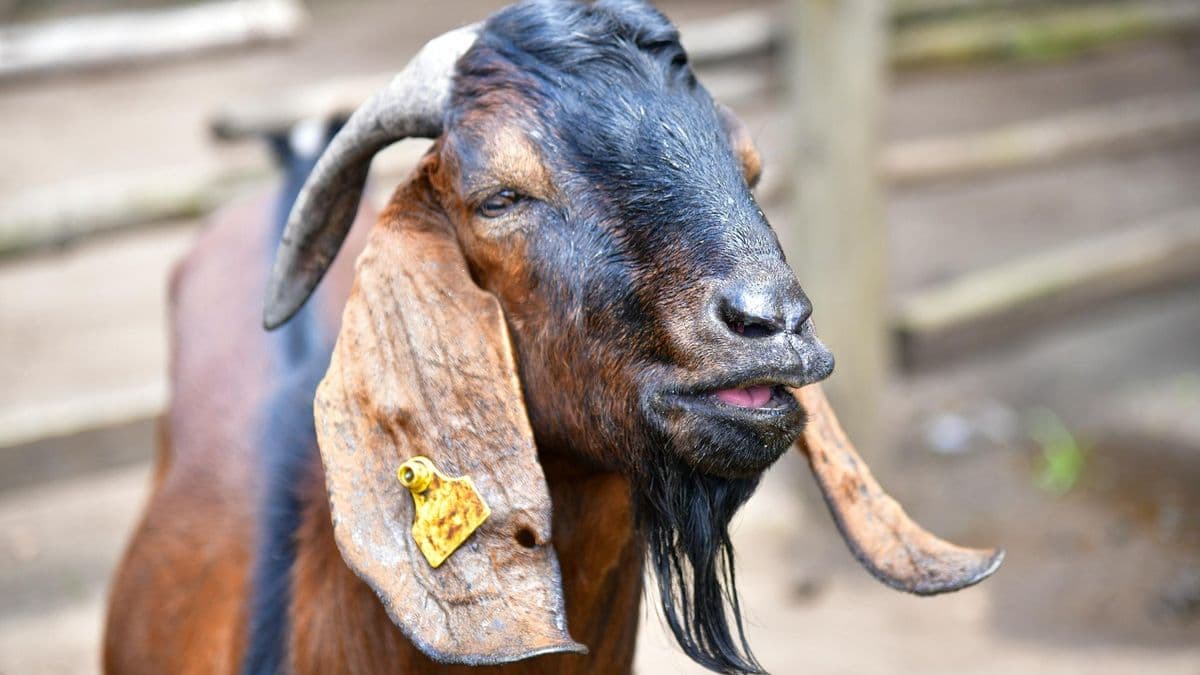
Ugandan scientists are testing the adaptability of a high-yield goat breed imported from China, in an experiment that could influence the future of the country’s livestock production if early gains are sustained.
The trial, currently underway at the National Agricultural Research Organisation’s Mbarara Zonal Agricultural Research and Development Institute (MbaZardi), involves nine Jianzhou Big Eared goats introduced last year under the Food and Agriculture Organisation (FAO)–China South–South Cooperation (SSC) Project.
While the animals have shown promising growth and breeding performance, researchers say the focus remains on understanding how well the breed can adjust to Uganda’s feeding systems, disease environment, and climate before any large-scale rollout to farmers.
Six of the goats are being closely monitored at MbaZardi, where scientists are tracking their weight gain, reproduction rates, and response to local conditions. The remaining animals are part of the broader project herd.
According to Dr Andrew Wange Bugenyi, a senior research officer at the institute, the initial batch, four females and two males, arrived in October last year and have since produced seven kids, bringing the total number of animals under the project to about 20.
Early growth figures are encouraging but fall slightly below initial projections. The goats were expected to gain up to 200 grammes per day, but are currently averaging about 145 grammes under local feeding conditions.
“We are seeing encouraging growth performance even with local feeds,” Dr Bugenyi said. “Kids born in late January are already weighing about 17 kilogrammes at just two and a half months, which is quite impressive.”
Even so, researchers caution that such results are preliminary and must be assessed over a longer period and across varying conditions.
“We are still studying how they respond to our environment, the diseases, and the feeds available here,” Dr Bugenyi added.
One area of interest is the animals’ feeding behaviour. Scientists have observed that the goats are adapting to locally available forage, including caliandra and fig leaves, which could reduce reliance on expensive commercial feeds if the trend continues.
Health performance is also under close watch. So far, the goats have shown resilience, with only minor challenges such as worm infestations, which researchers describe as manageable within standard livestock practices.
Speaking during a field visit to Mbarara this week, FAO Senior Programme Specialist, Debel Gutta said the project is now focused on consolidating gains and ensuring that tested innovations can be sustainably integrated into Uganda’s agricultural systems.
“This project demonstrates how international cooperation can deliver real results,” Mr Gutta said. “But it is important that we document what works, what does not, and how best to scale it.”
Beyond individual performance, scientists are particularly interested in the breed’s potential for crossbreeding with Uganda’s indigenous goats.
Dr Jacob Mukose, the national livestock counterpart for the project, said local breeds such as the Mubende and East African goats are typically smaller and slower-growing, limiting their productivity.
The introduction of the Jianzhou Big Eared goats is intended to improve these traits over time, with researchers aiming to develop hybrids that grow faster and reach market weight sooner.
However, Dr Mukose emphasised that such gains will depend on careful breeding, consistent feeding, and proper management.
“This is not an overnight solution,” he said. “We have to study the genetics, the environment, and how farmers will manage these animals before we can recommend wide adoption.”
The government is also watching the trial closely as part of broader efforts to increase livestock productivity and tap into export markets, particularly in the Middle East, where demand for goat meat is high.
For now, however, officials and researchers agree that the priority is evidence.
In Mbarara District, some farmers have already begun receiving training in improved livestock management practices, including hay and silage making to ensure feed availability during dry seasons.
District Production Officer, Mathias Byamukama said such interventions are critical to supporting any future introduction of improved breeds.
“With better feeding and management, farmers will be in a position to benefit from these innovations,” he said.
As the project approaches its final phase, attention is turning to whether the early promise shown by the imported goats can be replicated at scale. For scientists at MbaZardi, the answer will depend not just on growth rates, but on long-term adaptability, cost of maintenance, and performance under real farm conditions.
The trial forms part of Phase III of the FAO–China SSC Project, one of the longest-running agricultural cooperation programmes between Uganda, China, and FAO. Since its launch in 2012, the programme has brought dozens of Chinese agricultural experts to Uganda to support technology transfer, establish demonstration farms, and build local capacity in crop production, aquaculture, and livestock. Nine experts are currently in the country, providing technical support in areas including animal breeding and feed management.