


How young women transform reproductive health challenges into enterprises
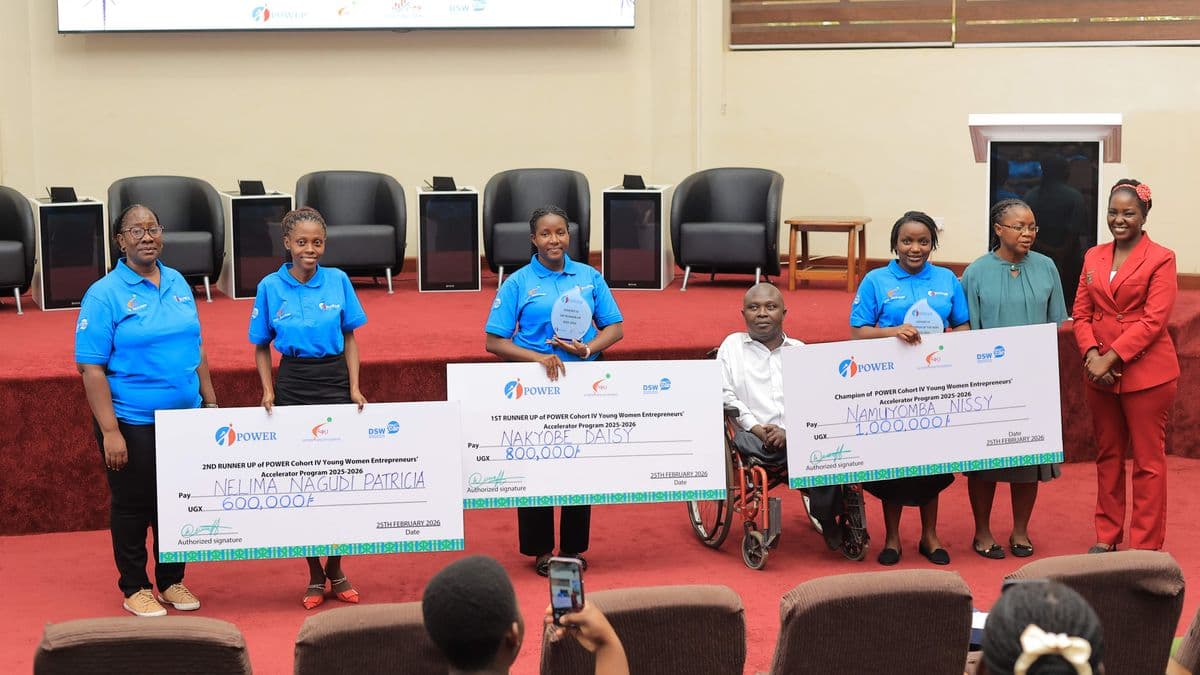
For Nissy Namuyomba, it took 12 months of intensive training, mentorship, and the courage to turn sexual and reproductive health challenges into business solutions.
Namuyomba emerged as the overall winner at the latest graduation and pitching event of the Power Programme, an initiative by Action 4 Health Uganda that equips young women with entrepreneurship skills while integrating sexual and reproductive health and rights (SRHR) into viable social enterprises.
She walked away with Shs1 million in seed capital to scale her enterprise, which tackles period poverty and limited access to SRHR information among women and girls with disabilities.
“I want to solve period poverty and urinary tract infections caused by synthetic pads, especially among women and girls with disabilities,” Namuyomba said after her win.
As chairperson of the Greater Masaka Association of Youth with Disabilities, she says women with disabilities face “double discrimination” stigma around both disability and reproductive health.
“The general public thinks a girl with a disability is not supposed to have access to SRHR information. They are not supposed to have relationships or make choices about their own bodies,” she said.
Through the Power Programme, she transformed her idea into a structured business model. She plans to use the seed capital to begin production of affordable reusable pads and disposable pants, while creating employment opportunities for youth, particularly women with disabilities.
“I have learned how to manage risk, formalise a business, and generate profit while creating social impact,” she said. “For me, it is about overcoming stigma and creating a fair space where women and girls with disabilities can access the services they deserve.”
Bridging Health Gaps Through Business
According to Hassan Waswa, Project Manager of the Power Programme at Action 4 Health Uganda, the initiative was born out of growing concern over unmet sexual and reproductive health needs among young women.
“The inspiration was driven by three areas,” Waswa said. “We are seeing increased unmet needs for sexual reproductive health services, rising teenage pregnancies, cases of gender-based violence, and youth unemployment.”
The organisation then began asking a difficult question, how could reproductive health, often treated purely as a social issue, be linked to entrepreneurship in a way that creates both income and impact?
“If you fall sick, you go to a health facility and you pay for the services,” he explained. “So why can’t innovators think about solving these problems within their communities in ways that are sustainable?”
Waswa noted that many sub-counties and parishes do not have fully equipped health facilities, leaving communities underserved. By supporting startups embedded within villages, he said, services can reach the “last mile” more effectively.
“These startups are located within the communities they serve. It becomes easier to extend services to the last mile,” he said.
Beyond health access, he identified two additional gaps: limited marketable skills and restricted access to finance for women entrepreneurs.
“Women struggle to access finance because they lack collateral or productive assets that financial institutions require,” Waswa said. “That is why we established the Multisectoral Investment Fund to help graduates access capital and assets.”
The 12-month accelerator supports women aged 18–35 from ideation to scale. Participants receive training in business management, budgeting, pitching, business plan development, digital marketing, and formal registration with the Uganda Registration Services Bureau (URSB). They are paired with certified business coaches who guide them throughout the process.
Another challenge, Waswa added, is the lack of structured support systems.
“Many young entrepreneurs want to formalise their businesses but lack networks and mentorship. In this accelerator, we provide business coaches and link them to markets and investors,” he said.
Since its launch in 2022, the programme has graduated 55 young women across four cohorts. According to Waswa, supported enterprises have reached more than 16,000 young people with SRHR information and services and created over 275 jobs.
Waswa also pointed to policy gaps affecting startups.
“Uganda has many innovative startups, but without clear regulatory guidelines, they struggle with taxation, certification, and compliance,” he said. “A clear startup policy would make it easier for these young entrepreneurs to thrive.”
A Growing Movement
The Power Programme providing opportunities for women in entrepreneurship and reproductive health operates under the slogan: “My Health, My Business, My Future.”
Sarah Kintu, CEO of Action 4 Health Uganda, says the long-term vision is to build a generation of women who create both profit and social impact.
“Many businesses focus purely on profit. Our focus is integrating reproductive health into enterprises because health touches everyone,” she said. “Women struggle with collateral and formal support systems. We created a financing and mentorship ecosystem so they don’t walk alone,” Kintu added.
So far, the programme has incubated businesses in 13 districts across Uganda, each supported by a designated Power Ambassador to strengthen community outreach and brand presence. With plans to establish regional accelerator hubs in Northern, Eastern, Central and Western Uganda, the initiative is steadily expanding its national footprint.
Recognising Innovation
At the February 25th pitching event, 17 young women presented solutions addressing early marriage, menstrual hygiene, mental health and digital health innovations.
Nakyobe Daisy, founder of Bloom Her Limited, emerged first runner-up, receiving Shs800,000 to formalise and scale her enterprise. For her, the mentorship was more than business training.
“It has been a journey of learning and discovering what I am capable of,” she said. “Whatever idea I have, I can turn it into reality and impact more women in my community.”
She plans to register her business with the Uganda Registration Services Bureau and invest in equipment and machines to strengthen production. Her goal is to expand menstrual health solutions in her community while training other women to become entrepreneurs themselves.
“I want to see no woman left behind,” she said.
Daisy believes supporting women-led enterprises has ripple effects beyond the individual founder.
“When you fund a woman-led enterprise, you are not only impacting one person, but her children and the future generation,” she added.
Ms. Barbara Kasekende, Head of Advisory at the Uganda Development Bank and one of the judges, urged participants to be precise and realistic in their projections.
“Don’t exaggerate your numbers. Investors look at alignment between your market size and your financials. Formalisation and clarity are key,” she said, emphasising integrity, viable market identification, and disciplined financial planning as critical for long-term sustainability.
James Makula from the Ministry of Trade, Industries and Co-operatives encouraged the participants to build trustworthy businesses and remain committed to their work. He also advised them to collaborate with the government and participate in government programs to benefit from available support and opportunities.
The programme has already expanded to Tanzania through partnership with the German Foundation for World Population, with plans underway to establish regional accelerator hubs across northern, eastern, western, and central Uganda.
For Namuyomba and her fellow young women, the journey is just beginning, and sustaining these ventures will be key to shaping a future of empowered women entrepreneurs